

AI for Project Mission: A Practical Course for Non-Profits
AI is already here. It didn't ask whether you have a budget for it. The EU AI Act neither.
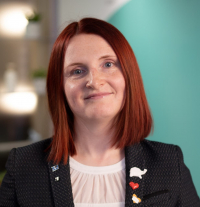
Alina Piddubna
NGO's trained
NGO employees ans volunteers tranined
years in PM practice training adapted to non-profit sector
Who this course is for
Executive director or board member
shaping your organization's AI strategy and needing to make decisions about AI adoption without becoming a technologist. You need to understand what your board must know, what governance decisions stay with you, and how to explain AI investment to donors as mission investment rather than overhead.
Program or operations manager
looking for practical tools that reduce the time you spend on administrative tasks and increase the time you spend on actual program delivery. You manage logframes, activity reports, M&E indicators, and donor deliverables. AI can help with all of that, if you know how to use it without creating new risks.
Fundraiser or communications manager
wanting to use AI for grant writing, donor communications, and impact storytelling, while protecting the authentic voice of your organization and maintaining donor trust. You need to know where the line is between AI-assisted fundraising and something that would damage the relationship if discovered.
M&E manager or program evaluator
seeking better ways to measure and communicate impact, using AI to analyze data, structure logframe indicators, and generate evidence-based reports for donors. You want real evidence, not the appearance of evidence.
Anyone in a non-profit who has heard about AI
but doesn't know where to start, and wants to understand what is genuinely useful versus what is hype, and what is safe to use versus what creates risk for your beneficiaries, your data, or your donor relationships.
This course is NOT for you if:
You work in a corporate or commercial organization Every case, every tool, every question in this course comes from the non-profit reality: grants, beneficiaries, donors, boards, and a big mission on a small budget. The context is specific by design. You are looking for a deep technical AI course This course covers AI at the strategic and practical level: what to use, when, how, and at what risk. It does not cover how AI systems are built, how to train models, or how to code.
Why we created this course
What you'll be able to do
Concrete skills and outcomes you'll walk away with
Use AI for grant writing without losing your organization's voice or your donor's trust
Write stronger applications faster, and know exactly when to disclose AI use, how to maintain authenticity, and where the ethical line sits for your specific donor relationships
Build and maintain a living logframe with AI support
Use AI to structure indicators, track assumptions, and generate donor-ready evidence at any point in the project cycle, not reconstructed at the midterm review
Analyze impact data that would have taken weeks to process
Turn field data, beneficiary surveys, and activity reports into structured M&E analysis, with AI doing the processing, you doing the interpretation, and the methodology staying yours
Protect beneficiary data when AI is involved
Know exactly which data you can use with which tools, under what conditions, and what governance your organization needs to put in place, especially when working with IDPs, trauma survivors, veterans, or children
Explain AI to your board, your donors, and your team
Give your board the information they need to make governance decisions. Explain to European donors that your AI use is responsible and aligned with EU regulatory expectations. Bring your team along without losing the skeptics.
Understand where your organization stands on EU AI Act compliance
Know which tools and use cases are regulated, which are high-risk, and what your obligations are as a deployer of AI systems, so your EU donor relationships are protected, not exposed
Build an AI policy for your organization
Leave the course with a draft AI policy, an AI strategy canvas, and an action plan, not just conceptual understanding, but documents you can actually use
Multiple sessions. One coherent program.
Session 1: AI for Non-Profits - Reality Check
What problem are you actually trying to solve - and will AI solve it?
How is using AI in a non-profit fundamentally different from the corporate context?
What worries you most about AI for your organization - and is that concern justified?
Who in your organization needs to understand AI - and what exactly do they need to know?
What does "AI adoption done right" look like when it serves the mission rather than undermining it?
Practice: Live overview of the free and low-cost AI tool landscape for NGOs. Getting started with Claude and ChatGPT for non-profit use cases. Live demo and hands-on practice.
- What problem are you actually trying to solve - and will AI solve it?
- How is using AI in a non-profit fundamentally different from the corporate context?
- What worries you most about AI for your organization - and is that concern justified?
- Who in your organization needs to understand AI - and what exactly do they need to know?
- What does "AI adoption done right" look like when it serves the mission rather than undermining it?
- Practice: Live overview of the free and low-cost AI tool landscape for NGOs. Getting started with Claude and ChatGPT for non-profit use cases. Live demo and hands-on practice.
Why learn with INSTAR and this trainer
Non-profit-specific
No generic AI content with "NGO" added to the title. Every case, every tool, every question comes from the reality of civil society work: grants, beneficiaries, donors, boards, limited budgets, and a mission that has to justify every investment. If it doesn't apply to your context, it is not in this course.
Strategy and practice in the same session
The first half of every session is a Socratic dialogue on the strategic and ethical questions. The second half is live demonstrations and hands-on practice with specific AI tools. You leave with both the understanding and the skill to apply it the next morning.
Ethics as foundation, not footnote
Using AI with vulnerable beneficiaries, protecting sensitive data, navigating EU regulatory obligations, maintaining transparency with donors, these run through every session. They are not confined to a separate "ethics module" because they are not a separate issue.
Affordable tools only
Only free or genuinely affordable tools that fit NGO budgets. No enterprise solutions. No tools that cost more than your monthly operational budget. The constraint is real and the course respects it.
Taught by a practitioner with direct NGO experience
Natalia Starynska is a PMP and CAPM-authorized PMI instructor with dual PMI instructor authorization - one of very few such specialists in Ukraine. She has trained 1,200+ professionals across 80+ courses in IT, banking, construction, pharmaceuticals, and the public sector. She has worked directly with Ukrainian NGOs and international organizations including EEF, PACT, GIZ, and STCU - organizations that know exactly what grant accountability, M&E rigor, and donor transparency mean in practice. This course is built from that experience.
Who leads the course
Graduate results and what they say
"Alina, thank you for the course! Maybe we were not the model students and did not always do the homework (I am myself), but it was interesting. We have met new people; we have learned a lot of interesting information. A lot of knowledge will come in handy. You are easily and interesting. Thank you!"
"Good seminar with lively present-day examples"
"This practical course helped not only to gain knowledge necessary for my work but also to practice it, what is equally important in my work"
"The course has completely proved my expectations, good quality of handling the material"
4 live online sessions
hybrid format: strategic dialogue + tool practice in every session
Slides with key insights and conceptual frameworks
or each session, minimal text, maximum clarity
Live AI tool demonstrations
and hands-on practice during sessions; you try the tools while the trainer is there
Non-profit practitioner templates
ready to use the next morning: - AI strategy canvas for NGOs - Grant application drafting framework with AI - Logframe indicator structuring with AI support - Beneficiary data governance protocol - Impact measurement and donor reporting framework - Organizational AI policy template (EU AI Act aligned) - AI tool evaluation checklist for NGO budgets
Overview of free and affordable AI tools for the non-profit sector
curated and tested
Real case discussions
from Ukrainian and international NGOs - successes and failures
Group chat
with Natalia and fellow participants throughout and after the course
Certificate of completion
про проходження курсу
Format and price
Course information
- Dates
- Group forming — register to reserve your spot; start date announced when minimum group size is reached
- Sessions
- TBD (based on group formation)
- Time
- 19:00–22:00 Kyiv time
- Level
- Intermediate
- Language
- Ukrainian
- Format
- Live online · Small group
- Certificate of completion
- Yes
Related certifications
FAQ
Have a question?
Leave your contacts and we'll get back to you shortly.
This course has no open dates yet.
Enter your email and we'll notify you when registration opens for AI for Project Mission: A Practical Course for Non-Profits.
We'll send one email when registration opens. That's it.