
A portfolio, programme and project management regulation for a 150-person project-based organisation
Industry: Digitalisation services, nationwide · Service: Corporate project management system implementation. In three months, from leadership interviews to an approval-ready version, we brought scattered regulations together into one document the whole organisation uses. It builds on a prior diagnostic and is designed around the existing project management information system.
What was delivered, in short
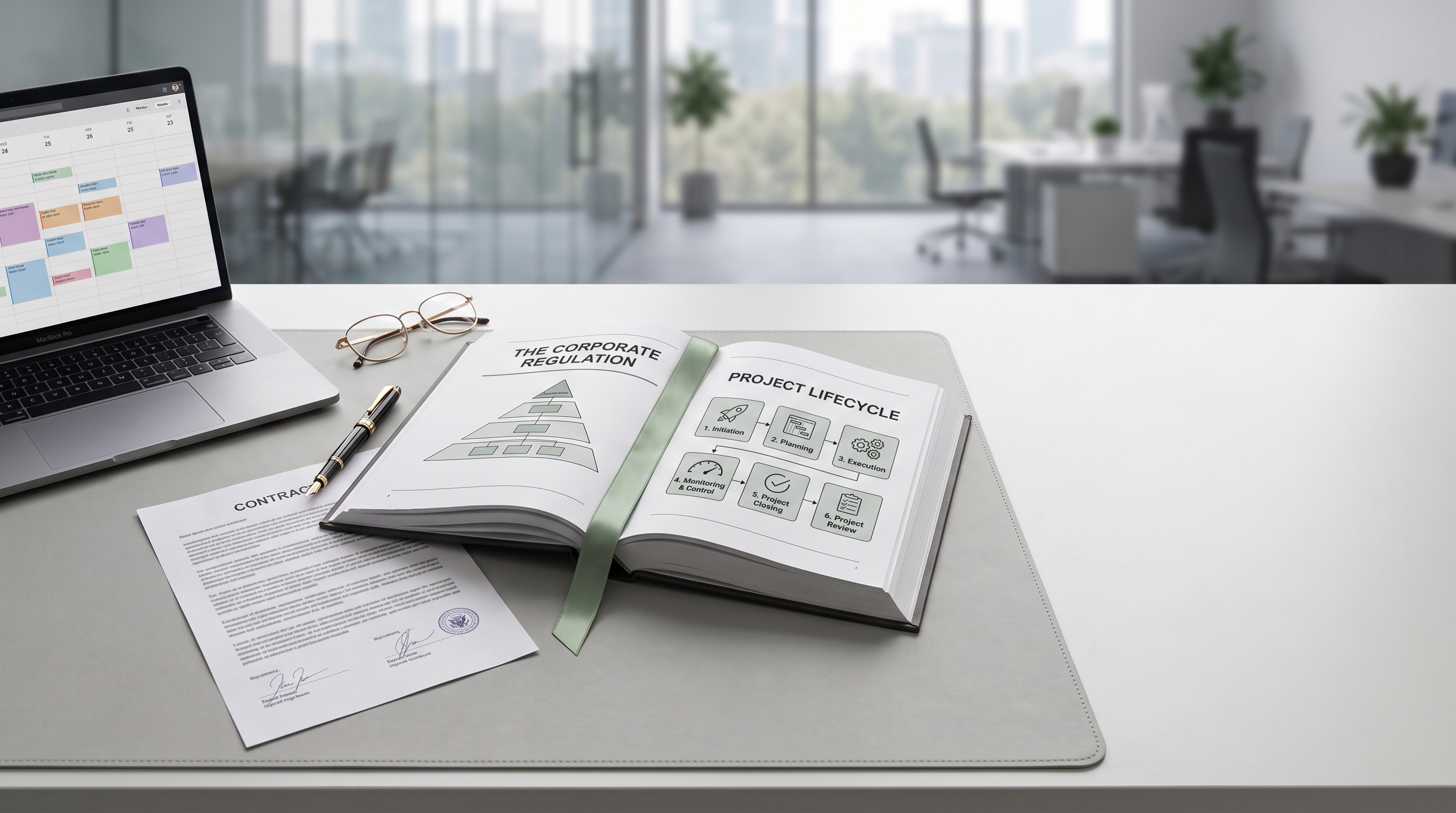
INSTAR developed a Project and Programme Management Regulation for the client: one document describing how the organisation runs its portfolio, programmes and projects, who is responsible for what, which phases programmes and projects go through, how they are classified by complexity, and how the methodology may be adapted to a specific case. The work took about three months, from structured leadership interviews to a working version ready for approval. The document is the natural continuation of the project management maturity diagnostic we had run for this organisation earlier.
About the client
A Ukrainian company of about 150 employees delivering digitalisation services nationwide. It is a project-based organisation: almost all of its activity runs through programmes and projects grouped into thematic clusters, with several funding sources and different reporting requirements. It has its own project management office and an implemented project management information system on the Microsoft stack. A mature management culture: the organisation had already been through a maturity diagnostic and had a first regulation from 2021 that it had outgrown.
Business challenge
The 2021 regulation described projects, but not programmes or the portfolio. Over five years the structure grew more complex: programme clusters, a PMO as a centre of excellence, a regular portfolio review, a risk management framework, separate policies of adjacent functions. Each element was documented on its own; there was no single picture of how it all works together. New managers learned by oral tradition; client requirements of varying strictness were applied by feel. Leadership needed a document the whole organisation would use, from the PMO to programme teams, one that would stand as an indicator of the maturity of its management system.
Specific needs
- One document for three levels: portfolio, programme with sub-programmes, project.
- A description of this organisation: its real governance bodies, real clusters, real tools.
- Classification of programmes and projects by complexity, and the rules that follow from it.
- Programme and project lifecycles with phases, phase outputs and statuses in the PM information system.
- An adaptation mechanism: what may be changed, and by whom.
- Integration with internal documents already in force: risk framework, portfolio review procedure, PMO regulation, policies of adjacent functions.
- Anchoring in the existing PM information system: the methodology has to work in the tool already implemented, without a separate IT initiative.
What was delivered
Step 1. Structured interviews with leadership and the PMO. Some thirty questions on the content of the future document: which standard to build on, how to link with strategic goals, whether requirements differ by project complexity, what counts as a project and a programme here, which statuses, phases, artefacts and templates are needed, how to link with procurement, finance, HR, IT. Every question got a decision: include, reference, exclude or investigate.
Step 2. Document architecture. We agreed a "from system to operations" logic: first the place of project management in the organisation's governance, then the methodological base (typology, principles, lifecycles), finally the adaptation mechanism. Complexity classification was worked out separately: two matrix options by budget and duration, with open questions for leadership to decide.
Step 3. Drafting and iterations. Two working versions within a month, with client edits. Sections cover scope, principles, the value delivery system, hierarchy of management levels, delivery approaches, project management within governance, programme and project lifecycles, adaptation, reporting and oversight. Appendices are grouped into three blocks: methodological documents, PM-system instructions, competence development and templates, each with a readiness status and a plan for what still has to be created.
INSTAR team: two consultants, a project lead.
Business impact
- One document instead of several scattered ones. The regulation stitches the department structure, PMO, portfolio review, risk management and the PM information system into a single system with cross-references.
- Rules are now written. Complexity classification, statuses, phases, mandatory and recommended artefacts are fixed. A new manager can read how things work here instead of asking around.
- Managed flexibility. The adaptation mechanism defines what may be changed, who decides and where it is recorded. This removes the constant conflict between standard and reality in an organisation with many different clients.
- The methodology runs in the existing tool. Phases, statuses and artefacts are described for the PM information system already in place, so adopting the document does not trigger a new IT project.
- A maturity marker. For the organisation, this document is evidence of the level of its management system towards clients and partners, and a direct continuation of the diagnostic results.
Let's talk
Need to build or update a corporate project management system for your organisation? Tell us about the context and we will get back within two working days.
Articles worth reading without the inbox clutter
InStar publishes practitioner analysis on management, AI adoption, and organizational delivery. Get new content when it's ready in your mailbox.
No spam. Unsubscribe at any time.